
Checking St. Johns County Criminal History
Start with the record that answers the question. The St. Johns Clerk Court Records Search is the best first stop for a local prosecution, filed charge, hearing, or disposition. The Sheriff's Office supplies incident reports, booking records, and a ten-year county arrest check. FDLE supplies a statewide public name search. A person checking their own record for errors can use FDLE's free fingerprint-based Personal Review instead.
Gather the full legal name, known aliases, date of birth, and a case or report number when available. A name result is not a fingerprint match. Compare the court, filing date, charge, and other public identifiers before treating a result as the right person. Follow this order:
- Search the Clerk by party name, exact case number, or citation, then narrow the court type.
- Use the SJSO inmate page or Booking phone line for current custody, and request the agency report separately.
- Use FDLE when the question reaches beyond St. Johns County or requires a Florida repository result.
- Compare the arrest event with the later court filing and final disposition.
- Order a certified court copy or use fingerprints when identity or accuracy must be established.
Two St. Johns Records Counters
The most common local error is asking the wrong office. The Clerk does not create the police narrative, and SJSO cannot certify the court's final judgment. The Richard O. Watson Judicial Center houses the Clerk's Criminal Division and public terminals. The Sheriff's Public Records Unit handles sheriff reports, body-camera footage, address searches, crash reports, booking material, and its limited local arrest check.
Clerk Criminal Division
4010 Lewis Speedway
St. Augustine, FL 32084
(904) 819-3600
Weekdays, 8 a.m. to 5 p.m.
SJSO Public Records Unit
900 Law Enforcement Way
St. Augustine, FL 32092
(904) 810-6610
Online portal, email, phone, or mail
The official Sheriff's Office home page shows the agency's main public routes.
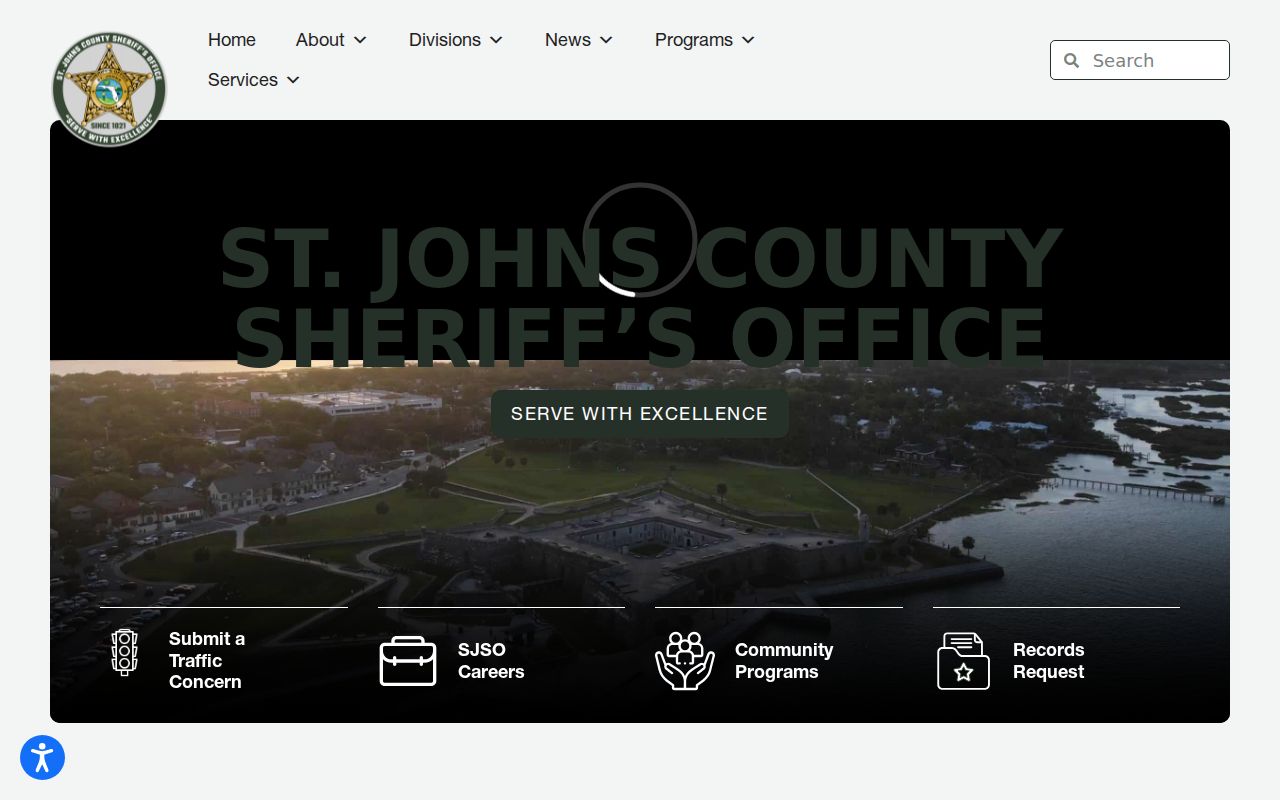
That agency page is the safe starting point when a report link or records address changes.
Florida Official Background Checks
The Florida Department of Law Enforcement, Criminal Justice Information Services, is the central state repository. Any member of the public may order the public version of a Florida name-based record through CCHInet Instant Search. The statutory search fee is $24, and the instant card transaction adds $1. A demographic match can miss an alias or confuse similar names, so it is not the same as a fingerprint-confirmed record.
FDLE also offers staff-processed certified or non-certified searches and ORI searches. LiveScan vendors transmit fingerprints under the ORI supplied by the agency that requires the check. For personal accuracy review, the subject may send a fingerprint card to FDLE at no repository fee and use the challenge process for disputed data.
The FDLE Florida Checks page compares the official routes.
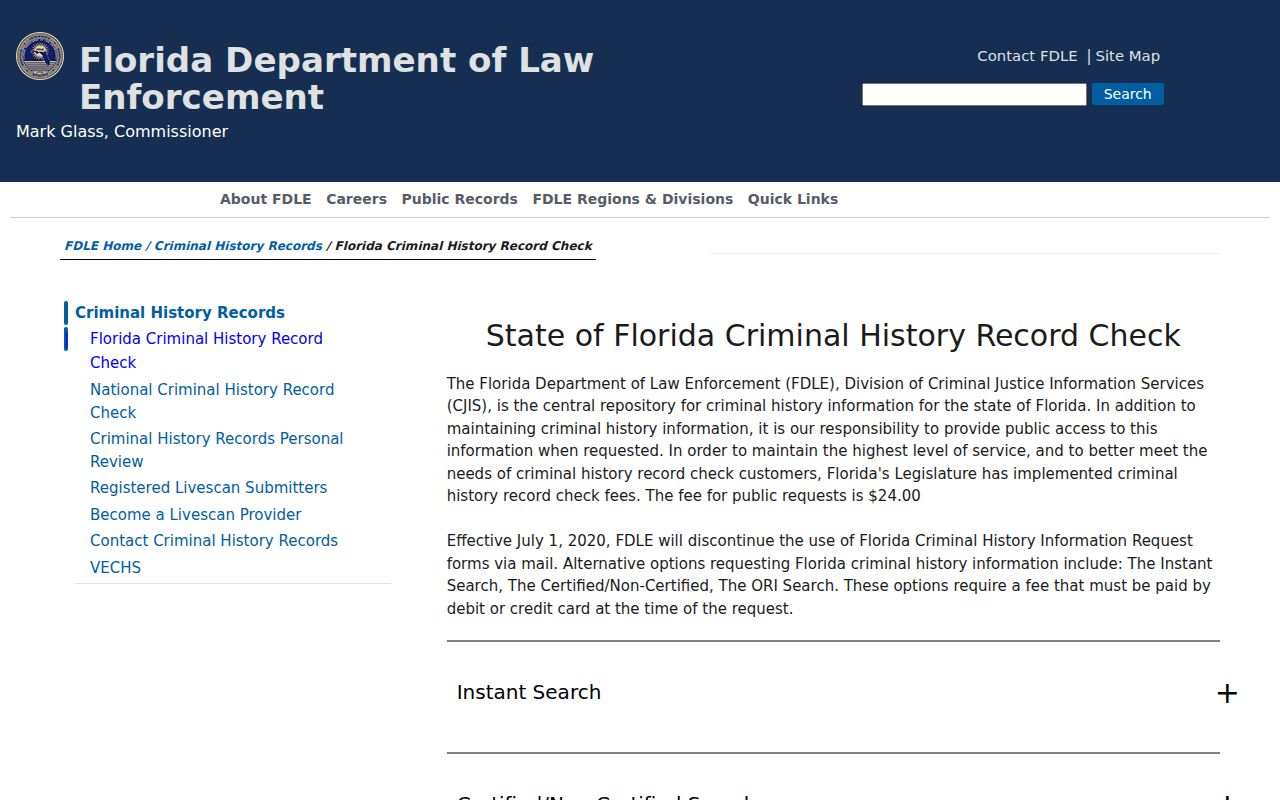
The comparison helps separate a quick public name search from a certified or ORI-based request.
Inside the FDLE Name Search
CCHInet asks for a first and last name, with middle and alternate names available to improve the match. Race, sex, and date of birth help narrow results. Compound last names must follow the portal's formatting rules. Each new search is charged, so review spelling before submitting.
| Field | Use | Required |
|---|---|---|
| Last name | Primary surname match | Yes |
| First name | Primary given-name match | Yes |
| Middle name | Narrows common names | No |
| Other names | Tests known aliases | No |
| Birth date, race, sex | Demographic comparison | Portal dependent |
The official Instant Search screen is the only place to submit the data.
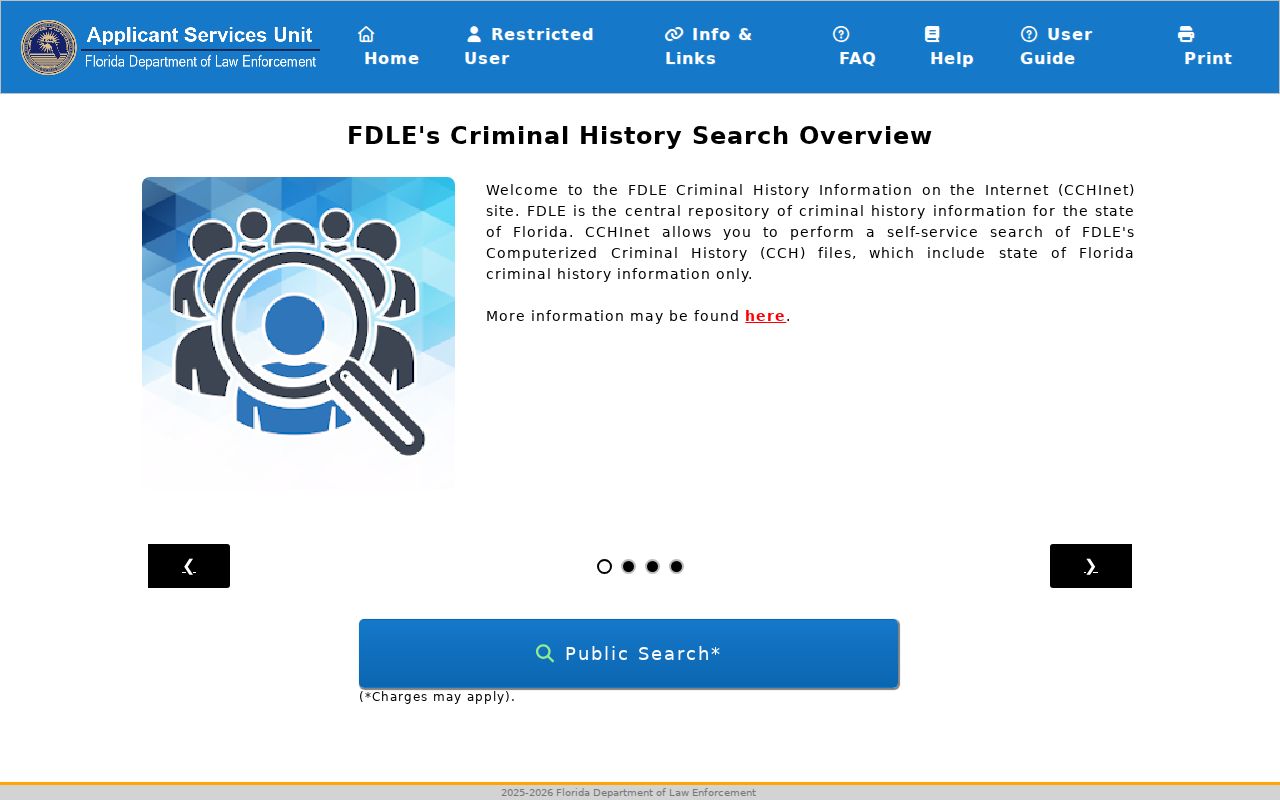
A paid result should still be checked against the originating court when a disposition matters.
Criminal Record Types
St. Johns County criminal records describe different points in one event. Police create an incident or arrest report. The jail creates the booking entry and custody record. The State Attorney chooses filed charges, and the Clerk records the court case and result. FDLE links reported arrest and disposition data in the state repository. FDC creates prison or felony-supervision records if the sentence reaches that system.
- Arrest and booking: agency allegations, fingerprints, booked charges, bond, and custody.
- Court case: filed charges, motions, hearings, pleas, disposition, and sentence.
- Repository history: Florida arrest events matched with reported outcomes.
- Warrant: an order that may remain confidential while active.
- Corrections and registry: custody, supervision, or a separate statutory registration duty.
St. Johns Booking Record Gaps
The SJSO inmate search displayed a temporary-down notice during the July 2026 research review. That does not erase the booking record. Call Booking at (904) 209-3125 for current bond or custody, request booking material from the Records Unit, and use the Clerk for the later case. The Main Detention Unit holds pretrial detainees and county arrestees, while the Community Work Release Center serves eligible sentenced men.
The FDC Offender Information Search is a different layer for state prison and felony supervision.
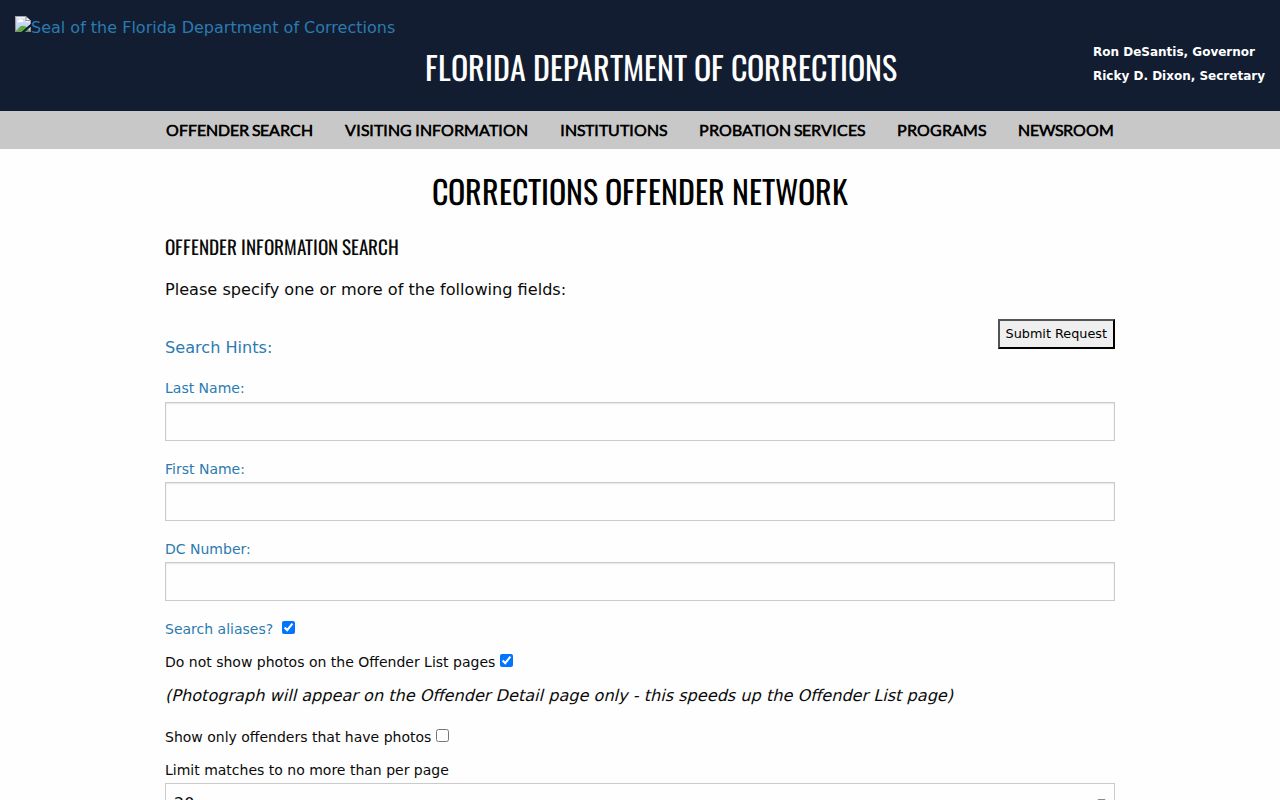
A missing county-jail result should not be replaced with an FDC search unless the person has entered the state corrections system.
Inside a St. Johns County Criminal Record
A complete reading joins identity, event, and outcome. The arrest charge may change when prosecutors file a case, and the filed charge may change through a plea or dismissal. Read each charge line to its own disposition. Do not treat the highest charge on the first screen as the final result.
| Name & Identifiers | Legal name, aliases, birth data, and agency identifiers used to distinguish people. |
|---|---|
| Arrest / Booking Data | Agency, report and booking numbers, dates, booked charge, bond, and release. |
| Charges & Statutes | Filed count, offense label, Florida section, and degree. |
| Disposition | Dismissal, plea, verdict, adjudication, or other result for each count. |
| Sentence | Jail, prison, probation, fine, credit, and court-ordered conditions. |
| Custody / Supervision Status | Separate SJSO or FDC status that can change after the docket entry. |
St. Johns County Warrant Fallbacks
SJSO does not publish a verified comprehensive active-warrant roster. The official starting point is the FDLE FCIC Public Access System, which contains only selected Florida records and refreshes every 24 hours. It is not CCHInet. Other wanted records can exist.
Next search the Clerk docket for a public capias or warrant event, contact the issuing court, call SJSO nonemergency at (904) 824-8304, or make a focused records request. Active warrants and affidavits can remain confidential until served. Never confront someone based on a common-name match.
The selected wanted-person screen shows the limited statewide route.
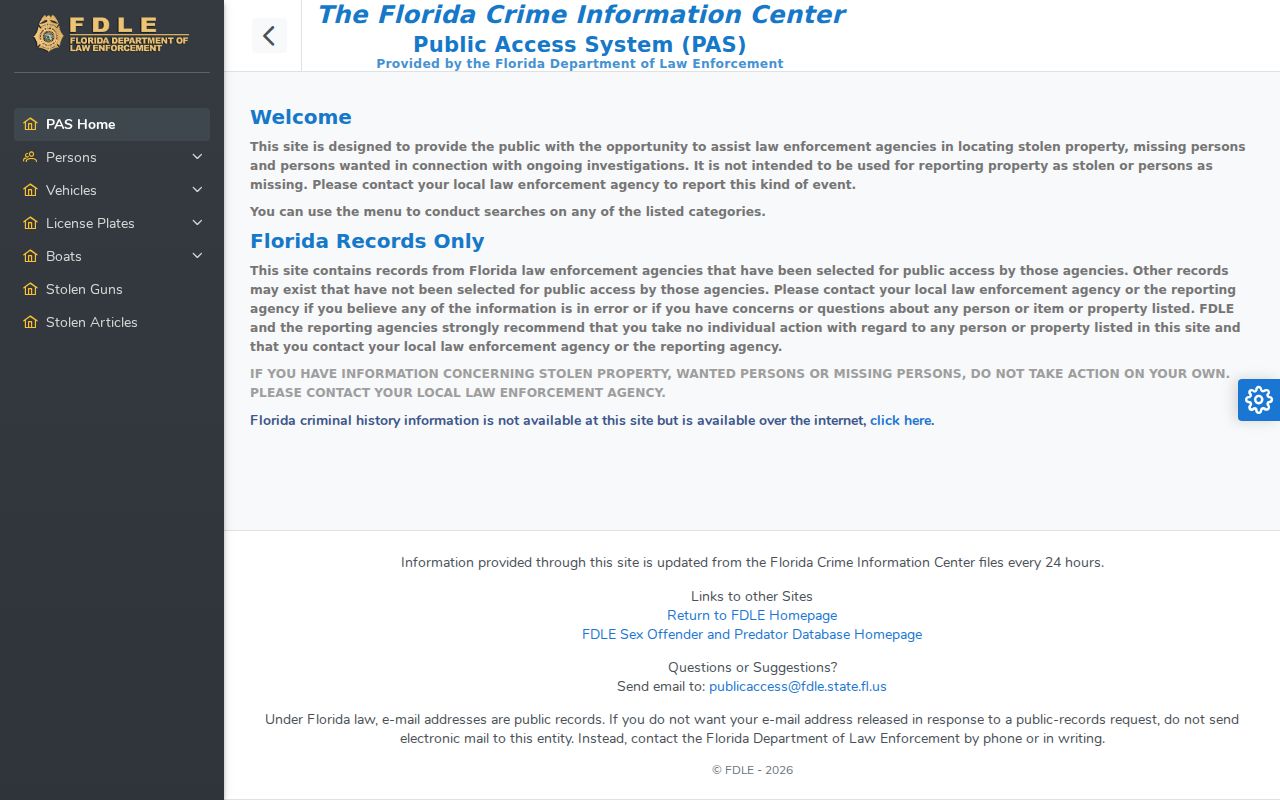
Its own warning is why the local phone and court fallbacks matter.
Public Access Laws in Florida
Florida starts with broad public access, but the right is to inspect a nonexempt government record, not to force an agency to create a new report. The custodian may redact confidential details and charge permitted copy or labor costs. Court records also follow judicial access rules, while FDLE dissemination and personal-review rights have their own statutes.
Key Statutes:
Chapter 119, Florida Statutes gives access to nonexempt public records.
Section 943.053 governs dissemination of Florida criminal-history information.
Section 943.056 creates personal review and challenge rights.
Section 943.059 governs court-ordered sealing.
St. Johns Record Fees Compared
Cost depends on the product and custodian. The Clerk can show available case images online at no charge, but authenticated or researched copies cost more. SJSO estimates significant labor before proceeding. Its ten-year local arrest check charges $10 when research exceeds 15 minutes.
| Service | Published amount |
|---|---|
| FDLE public search | $24, plus $1 card fee for Instant Search |
| Clerk copy | $1 per page |
| Clerk certification | $2 per document |
| Clerk search without case number | $2 per name per year |
| E-Certify | $6 plus document charges |
| Clerk fingerprint card for seal or expunge | $5 cash |
The Clerk's fee page is the source to recheck before ordering.
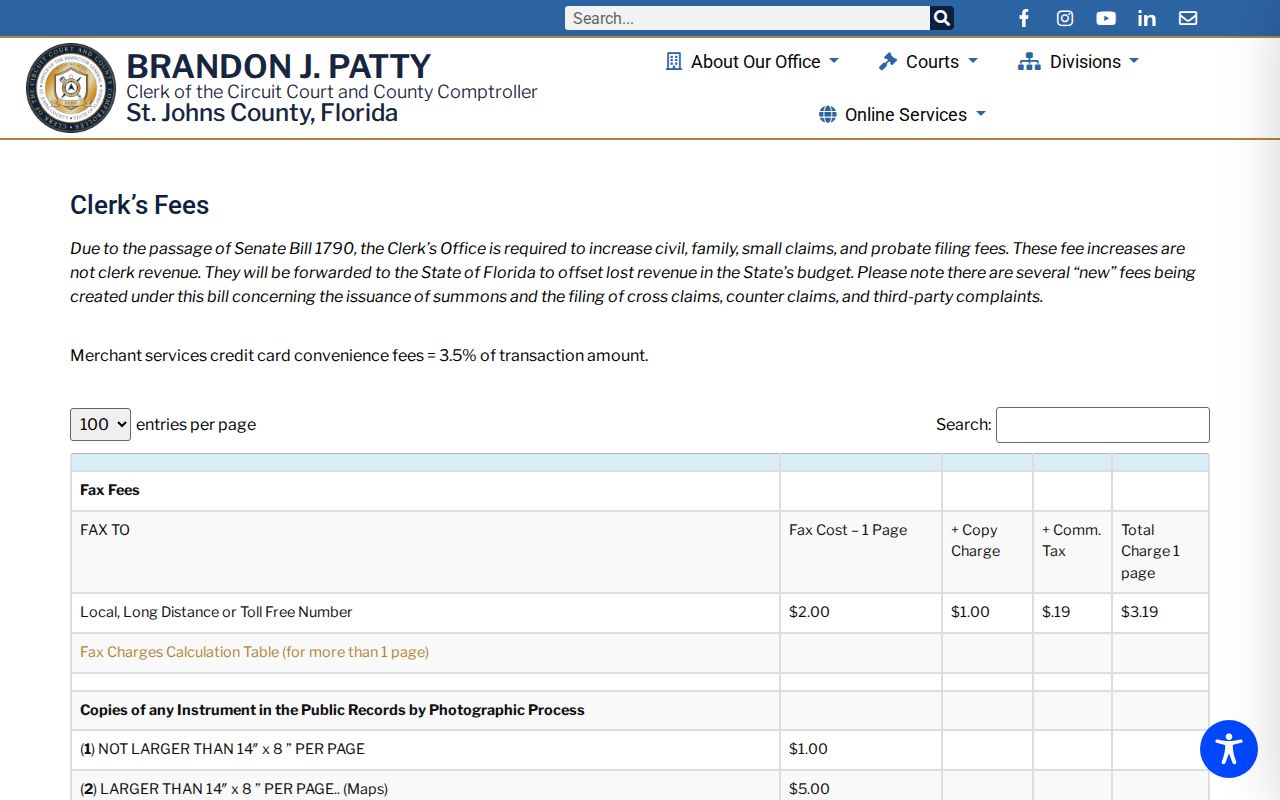
The fee schedule also helps distinguish a plain copy from a certified record.
Sealed, Expunged, and Restricted Records
Florida uses both sealing and expunction. Sealing blocks general public access but preserves the record under statutory controls. Expunction generally directs covered agencies to destroy or expunge the record, subject to exceptions. Neither remedy occurs merely because a charge was dropped. FDLE first decides whether to issue a certificate of eligibility, and the Circuit Court decides the petition.
Juvenile records, protected victim details, active investigative information, and confidential warrant material can also be withheld or redacted for reasons unrelated to sealing. A blank search is not proof that no record exists. The FDLE process page supplies forms and current eligibility instructions.
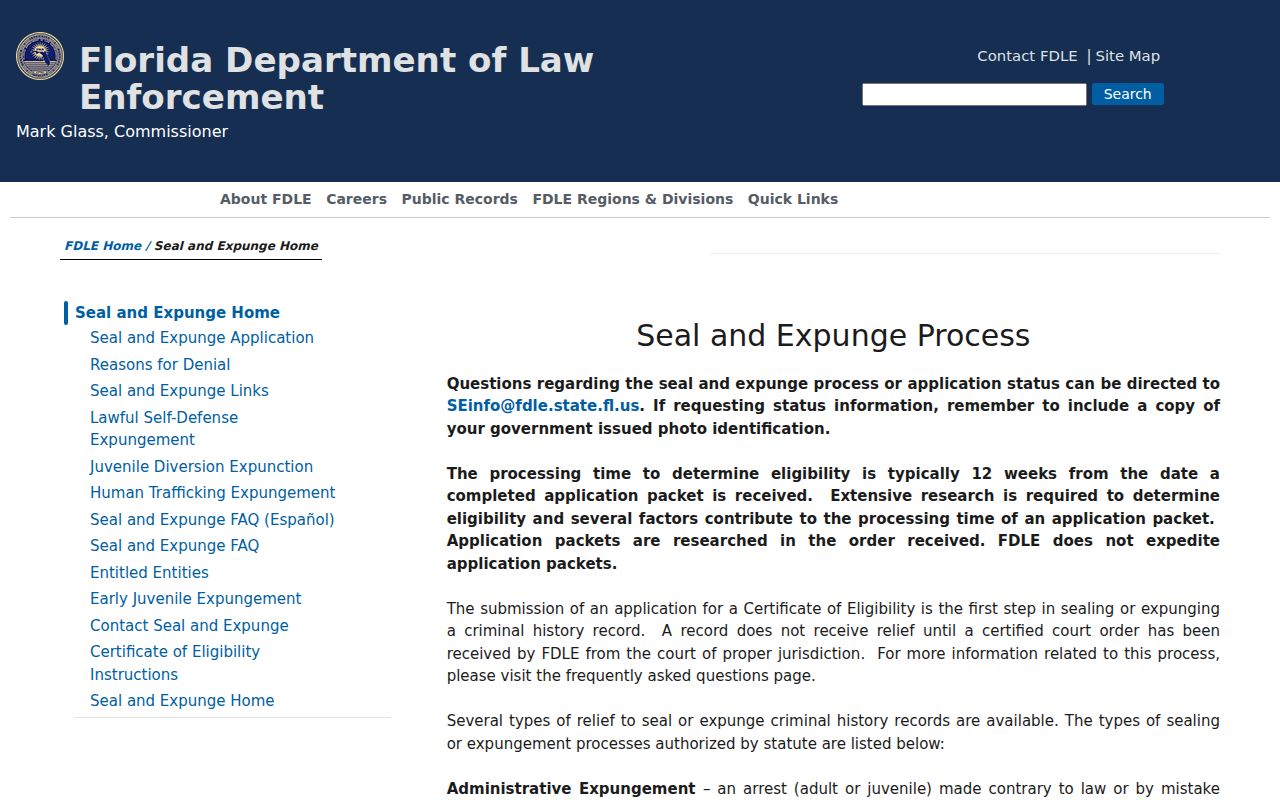
The certificate step and the court petition are separate parts of the Florida process.
St. Johns Supervision Records
FDC runs felony probation and post-prison supervision. The Florida Commission on Offender Review makes applicable parole and release decisions. Public verification usually starts with the Clerk docket for the sentence or violation motion, then FDC Offender Search for current public status. Field notes and individual supervision files are not an unrestricted public database.
St. Johns County's FY2024-25 Criminal Punishment Code report counted 1,334 scoresheets: 489 probation sanctions, 418 county-jail sanctions, 347 state-prison sanctions, and 72 community-control sanctions. Those figures describe scoresheets and sanctions, not unique people. They show why a docket result may lead to several different custody or supervision systems.
The Commission on Offender Review site identifies the state release authority.
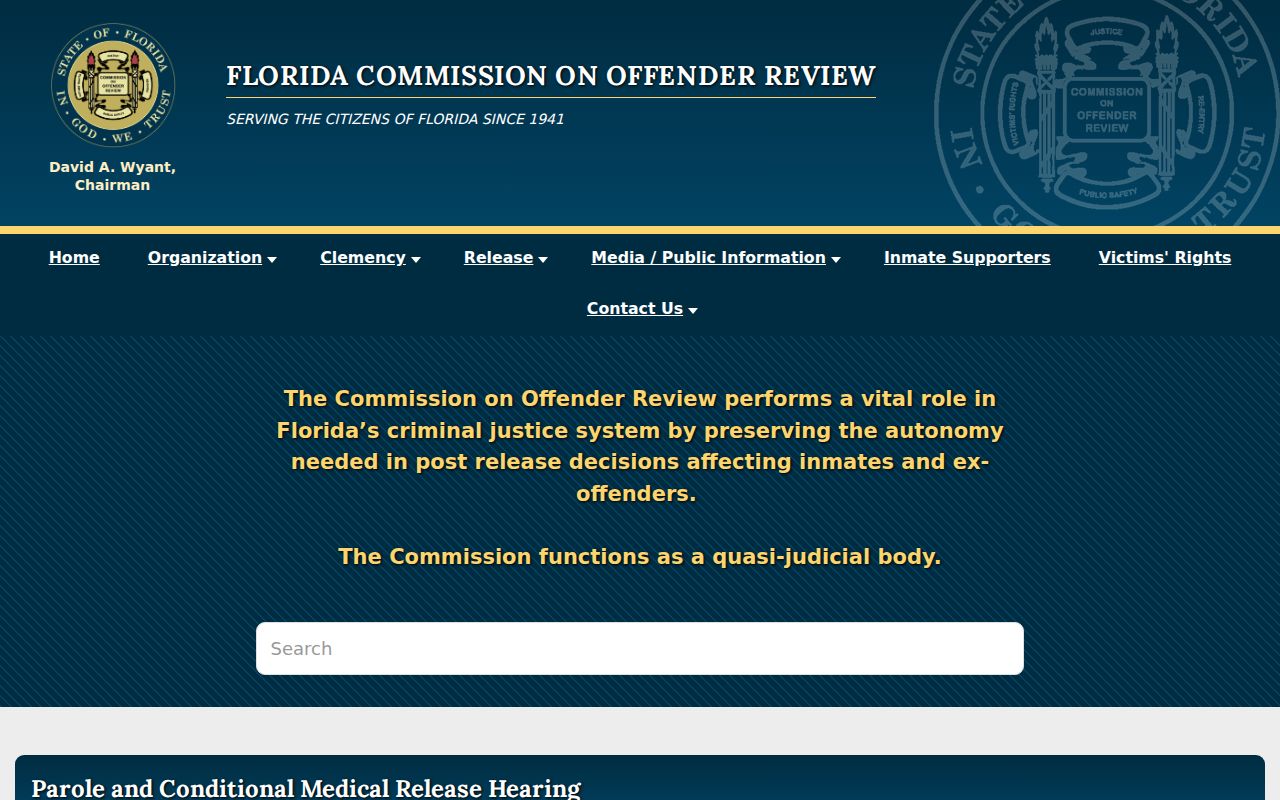
For a specific St. Johns case, the sentence and later violation events still belong in the court docket.
Growth Changed St. Johns Records
St. Johns County grew from 273,425 residents in the 2020 census to an estimated 346,328 in 2025. Record creation is split among SJSO, two municipal police departments, campus police, and the Florida Highway Patrol across 600.64 land square miles. The online court index is described as real time, yet archival criminal material generally requires a terminal or request, and the inmate search was temporarily unavailable during research.
A second break affects trend reading. SJSO began moving to incident-based FIBRS/NIBRS reporting in 2022. Older summary reporting counted the most serious offense in an incident, while incident-based reporting counts all qualifying offenses. A later total can therefore look higher without proving the same rise in real-world crime.
The same split matters for police reports. SJSO keeps sheriff incidents and body-camera material. St. Augustine Police uses its own NextRequest portal, while St. Augustine Beach Police accepts NextRequest, email, phone, fax, mail, and counter requests. Florida Highway Patrol or FLHSMV handles qualifying highway records. Give the correct agency a report number, names, date, time, location, and the exact item sought. A narrow request reduces search work and helps the custodian identify exemptions before quoting a cost.
Modern access also has a historical limit. Computerized Clerk records generally reach back to the 1990s, while older criminal and civil material from 1821 through conversion is not fully exposed online. Cases still active at conversion may be exceptions. A researcher working on an old St. Johns County criminal history should use a Watson Judicial Center terminal or submit the Clerk's criminal research form. Available online images can be viewed and printed free, but a certified copy must come through the Clerk.
These systems should be read as a chain, not as competing versions of one database. An incident can exist without an arrest. A booking shows custody, not guilt. A filed case can differ from the booked charge. The final docket outcome can later lead to county jail, FDC prison, probation, or no custody at all. Matching the record stage to its custodian keeps each conclusion within what the source can prove.
Federal records form one more layer. St. Johns County sits in the Jacksonville Division of the U.S. District Court for the Middle District of Florida. PACER holds federal dockets and filed documents, while the Bureau of Prisons locator covers federal custody. Those tools do not replace the St. Johns Clerk, SJSO jail search, or FDC locator. Use them only when the prosecution or custody moved into the federal system. An FBI Identity History Summary is also distinct: it is a fingerprint-based, subject-only record route, not a public name search.
Florida offense labels add context but do not predict a sentence. Circuit Court handles felonies. County Court handles misdemeanors, criminal traffic, and county or municipal ordinances. A first-degree misdemeanor can carry up to one year in county jail, while a second-degree misdemeanor can carry up to 60 days. Felony ranges vary by degree, enhancements, and the governing charge. The docket's filed count, disposition, and judgment are more useful than guessing from an arrest label alone.
When a record seems wrong, start at its source. Ask the police agency about its report, SJSO about booking data, and the Clerk about docket entries or document images. Use FDLE Personal Review when the dispute concerns one's own Florida repository history. Include the identifiers that tie the disputed entry to the correct event, and keep copies of the source document and any correction response. Repeating a public name search will not fix the originating record.
St. Johns County Criminal Records by City
Only two incorporated cities qualify for local profiles. St. Augustine and St. Augustine Beach police keep their own reports, but custodial bookings go through SJSO and criminal ordinance cases go to County Court. Neither city has a separate municipal criminal court. The city record pages explain each police request route and the handoff to county systems.
St. Augustine Criminal Records
16,033 estimated in 2024 · SAPD reports and County Court cases
St. Augustine Beach Criminal Records
6,810 estimated in 2025 · SABPD records and SJSO booking